the dypt blog

the latest features, guides and helpful articles from the dypt team

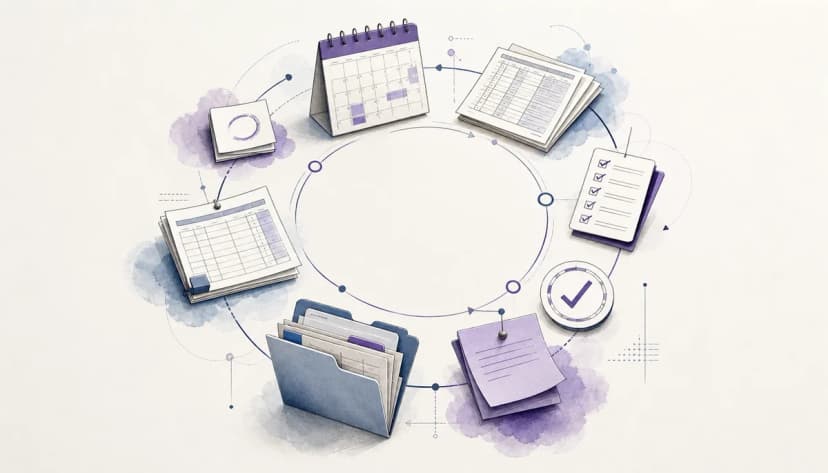
Editorial illustration of monthly close documents, checklist cards, calendar pages, and review notes organised into a reusable workflow loop.

How accountants can build a repeatable monthly close workflow

Dane PoyzerDane Poyzer••9 min read

Turn month-end close from a recurring scramble into a reusable workflow with clear steps, review points, deadlines, and a checklist you can improve each cycle.
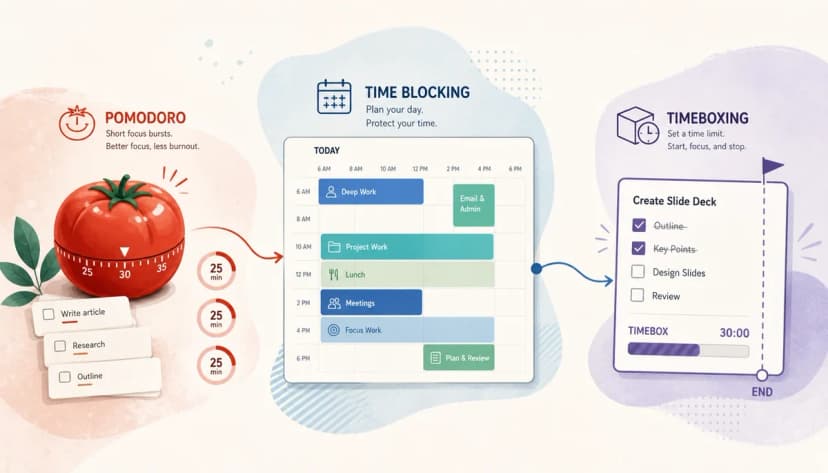
Illustrated wide header showing three planning methods side by side: a tomato timer with small task cards, a calendar filled with colored schedule blocks, and a bounded task list with a clear end limit.

Pomodoro Technique vs time blocking vs timeboxing: which one fits the way you actually work?

Dane PoyzerDane Poyzer••7 min read

Pomodoro Technique vs time blocking vs timeboxing: which one fits the way you actually work? A simple guide to choosing the right method.

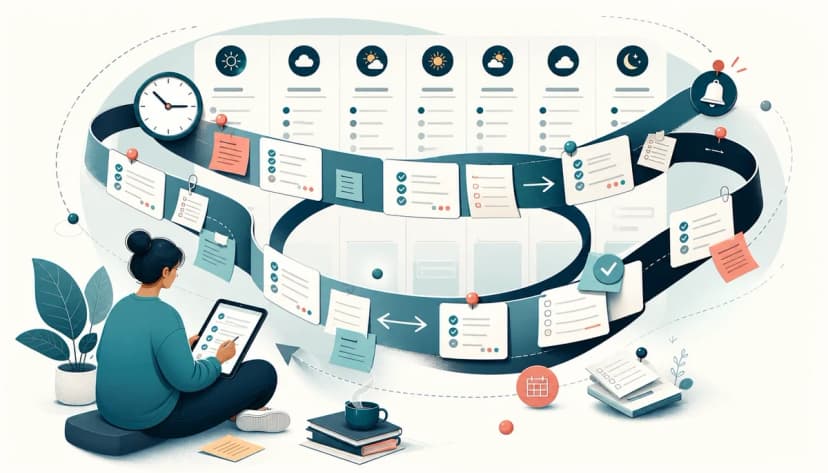
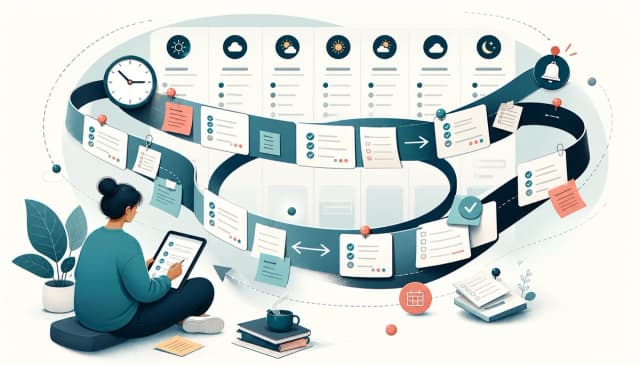
Editorial illustration of a looping stream of checklist cards circling through a weekly calendar while a person arranges the repeating tasks with a tablet and notes.

How recurring tasks keep your weekly plan from starting over every Monday

Dane PoyzerDane Poyzer••6 min read

Recurring tasks stop your weekly plan resetting by turning repeat work into a reusable system with notes, subtasks, reminders, and deadlines.

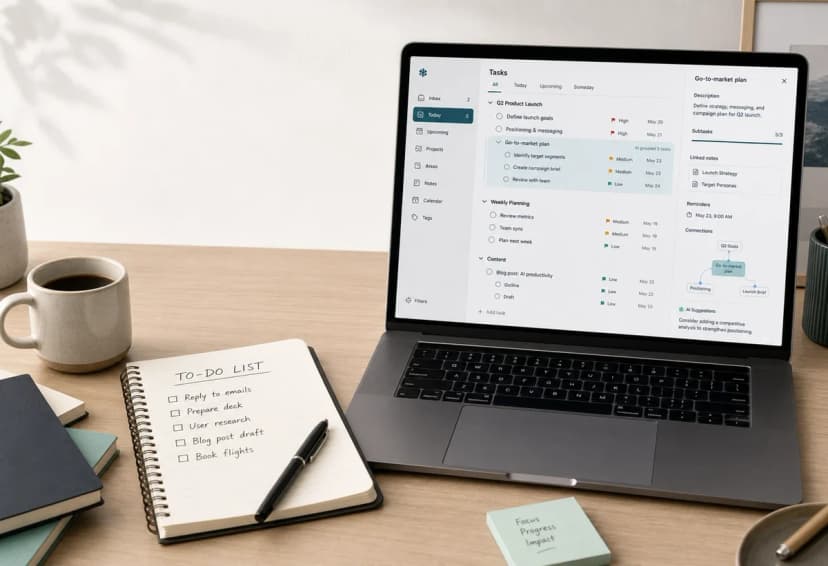
A split-view editorial illustration of a modern desk featuring a handwritten paper to-do list next to a clean digital AI task management interface with organized nested tasks.

AI Task Manager vs To-Do List: Which helps when you have too many tasks?

Dane PoyzerDane Poyzer••6 min read

Compare an AI task manager with a simple to-do list, including when each is enough and how dypt helps with vague, overwhelming, multi-step work.

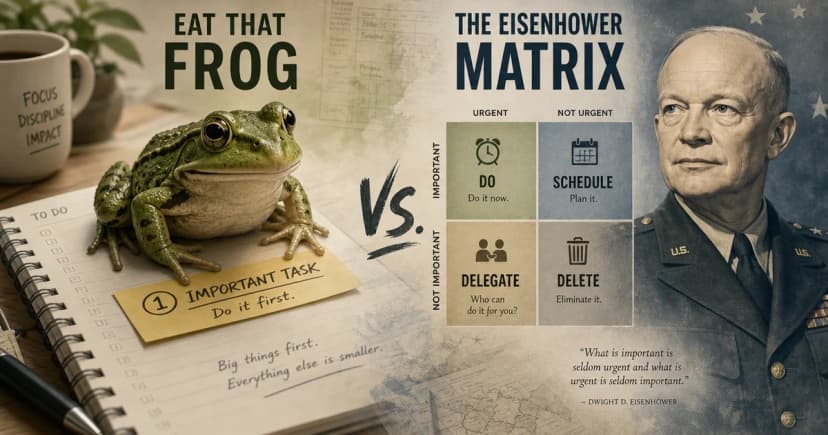
A blended visual contrast between eat the front and the eisenhower matrix

Eat the Frog vs. the Eisenhower Matrix: which method helps you start when everything feels urgent?

Dane PoyzerDane Poyzer••7 min read

Sort urgent work with the Eisenhower Matrix, pick one frog to start, and use dypt to turn the choice into a clear first action.

A glass jar with large rocks, pebbles, and sand beside a weekly planner on a tidy desk

Pickle Jar Theory for busy weeks: a simple way to fit the big work in first

Dane PoyzerDane Poyzer••8 min read

Fit the big work in first, so you protect your priorities before admin steals your week

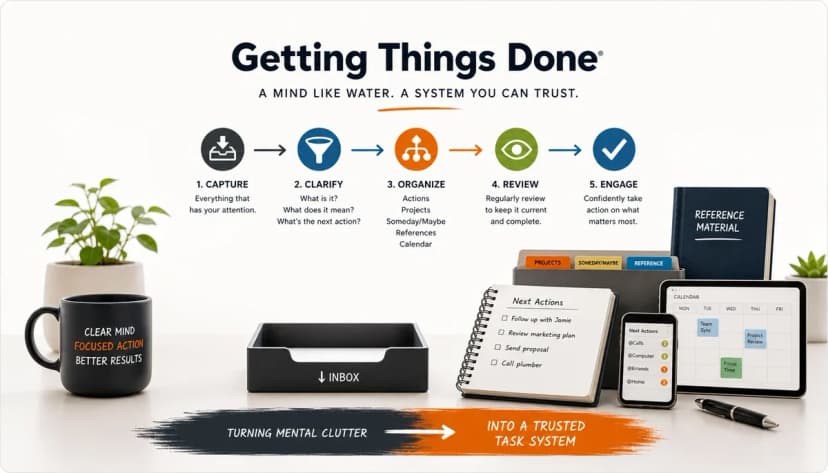
A minimalist and clean visual representation of the Getting Things Done (GTD) framework showing organized tasks and mental clarity with ample white space.

Getting Things Done (GTD), plainly explained

Dane PoyzerDane Poyzer••16 min read

Getting Things Done (GTD), plainly explained: learn what the GTD method is, where it helps, and how you can apply it without overcomplicating work.

An overwhelmed person trying to tackle task overwhelm

5 myths about task prioritization that make overwhelm worse

Dane PoyzerDane Poyzer••6 min read

Learn how to prioritize tasks without making your task overwhelm worse by spotting five myths that quietly fuel task paralysis.

A messy set of notes and ideas turning into a clear hierarchical task tree in a modern task planning app.

From brain dump to task list: a simple AI workflow for getting started

Dane PoyzerDane Poyzer••15 min read

Turn messy notes, meeting notes, and brain dumps into a clear dypt task tree with AI action extraction, subtasks, reminders, and next actions.

Get dypt updates

Get new articles, product guides, and practical updates from dypt