Dane Poyzer

On this page12 sections
When you hear tidy rules about prioritisation, it is easy to think the problem is you. In reality, a lot of common advice makes task overwhelm worse, especially when your list is long, vague, or full of competing deadlines.
If you are trying to work out how to prioritize tasks, you do not need more guilt. You need clearer next steps, a better way to weigh what matters now, and enough structure that your brain does not have to hold the whole plan at once. If overwhelm has already turned into avoidance, the guide to beating ADHD task paralysis has a more specific first-step workflow.
1. Myth: Urgency is the same as priority
Urgent tasks should always come first


Reality: Urgent is about timing, but priority is about consequence. The best next task usually depends on impact, deadline, and the time and energy you actually have.
Evidence: Research on the mere-urgency effect, published in the Journal of Consumer Research, found that people often choose urgent tasks over more important ones. That bias can keep you busy while the work that matters most keeps slipping.
Takeaway: Sort your list by impact, deadline, and effort, not just by who is shouting loudest. If you want one place to weigh those signals, see Priorities, deadlines, and reminders.
Pro tip: If two tasks feel equal, pick the one with the clearest real-world consequence if you ignore it.
2. Myth: Perfect ordering comes before action
You must rank every task before doing anything


Reality: You do not need a flawless ranking of your whole list to move forward. You usually only need one clear next step and a short shortlist for today.
Evidence: A 2006 meta-analysis by Peter Gollwitzer and Paschal Sheeran found that implementation intentions improved goal attainment across many studies. In plain terms, specific next actions help you act when task paralysis would otherwise keep you stuck.
Takeaway: Pick the next task you can start in 10 to 20 minutes, even if the rest of the list is messy. If you are blocked by a vague project, use the AI task breakdown workflow to turn it into usable first steps.
Pro tip: When your list feels too big, stop ranking and write the very next visible action for the top three items only.
3. Myth: Big projects should stay broad on your list
Large tasks should stay broad until you have more time


Reality: A vague task is hard to start because you still have to plan it from scratch. Breaking work into subtasks reduces task overwhelm and gives you a path you can actually follow.
Evidence: Goal-setting research from Edwin Locke and Gary Latham has long shown that specific goals lead to better performance than vague ones. "Finish project" is not a useful instruction, but "draft outline" or "email supplier" is.
Takeaway: Turn intimidating projects into a small task tree with clear next actions, notes, and rough time estimates. For the manual method, read how to break down large tasks; for the product workflow, see deep task hierarchies and subtasks.
Pro tip: If a task cannot be done in one sitting, it is probably a project and needs children, not wishful thinking.
4. Myth: Good priorities should stay fixed
Once you choose your priorities, you should not change them


Reality: Priorities are a living plan, not a promise you made to yesterday's version of you. New deadlines, new information, and your available time can all change what should happen next.
Evidence: The planning fallacy, described by researchers including Daniel Kahneman and Amos Tversky, shows that people routinely underestimate how long work will take. That is one reason a neat weekly order often falls apart once real life starts interfering.
Takeaway: Review your list daily and after major changes, then adjust dates, reminders, and estimates instead of treating change as failure. If you want help planning around reality, look at Time tracking and AI estimates.
Pro tip: Re-prioritising is not inconsistency; it is what happens when you use better information.
5. Myth: Flat lists are enough when you're learning how to prioritize tasks
A single flat list is the best way to prioritise every task list


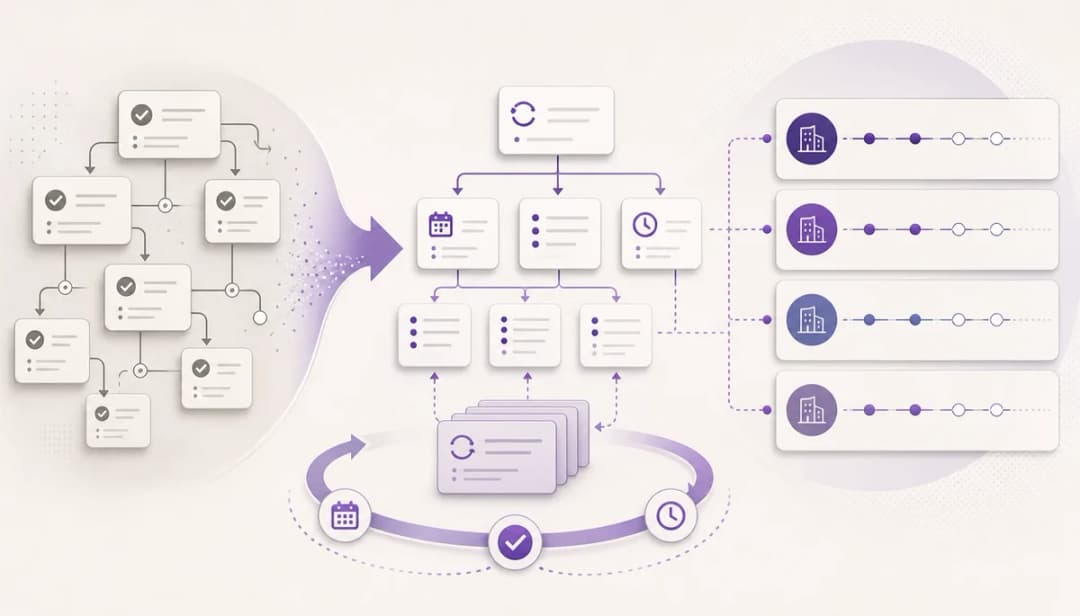
Reality: When you ask how to prioritize tasks, a flat list is rarely enough. You need to see projects, sub-steps, and context so you can choose the next action without holding the whole plan in your head.
Evidence: Cognitive psychologist Nelson Cowan argued that working memory holds far fewer items than most people assume, often around four chunks at a time. Grouping related tasks into projects and subprojects reduces that mental load and makes overwhelm less likely.
Takeaway: Group related work into a hierarchy, keep repeatable routines as reusable plans, and share task trees when other people need the same source of truth. If you want to try that setup, explore task hierarchies.
Pro tip: If your list mixes projects, errands, follow-ups, and ideas in one stream, reorganise before you try to sort by priority.
Wrapping up
These myths sound tidy, but they usually lead you towards busywork, guilt, and more task paralysis. Once you stop treating prioritisation as perfect sorting, how to prioritize tasks becomes much simpler.
You do better when you break work down, review priorities often, and choose the next step using real constraints instead of rigid rules. When the work is too vague to prioritize, start with AI task breakdown. If you want a calmer system for priorities, deadlines, reminders, and next actions, start using dypt.


Further reading
For the research behind these myths, look up the mere-urgency effect in the Journal of Consumer Research, Gollwitzer and Sheeran's meta-analysis on implementation intentions, Locke and Latham on goal-setting, Kahneman and Tversky on the planning fallacy, and Nelson Cowan on working memory. Those papers give useful context if you want the evidence, not just the advice.