Dane Poyzer
On this page8 sections
Part 5 showed how to turn your checklist into a practical month-end close calendar. This final guide is about what happens after the close is finished.
That is the moment most teams skip. Everyone is tired, the numbers are out, and the next month is already moving. The easiest thing is to leave the completed close where it is, copy whatever you can find next month, and hope the same problems do not repeat.
That is how a month end close workflow slowly decays. The checklist gets copied, but the learning does not. The same late inputs stay late. The same review questions come back. The same vague steps need interpreting again.
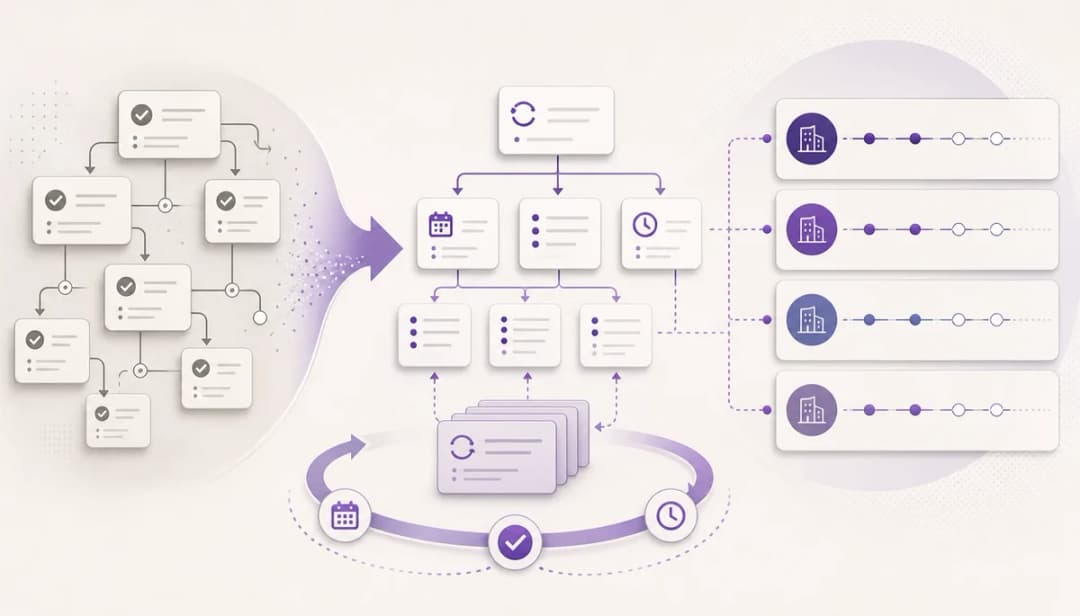
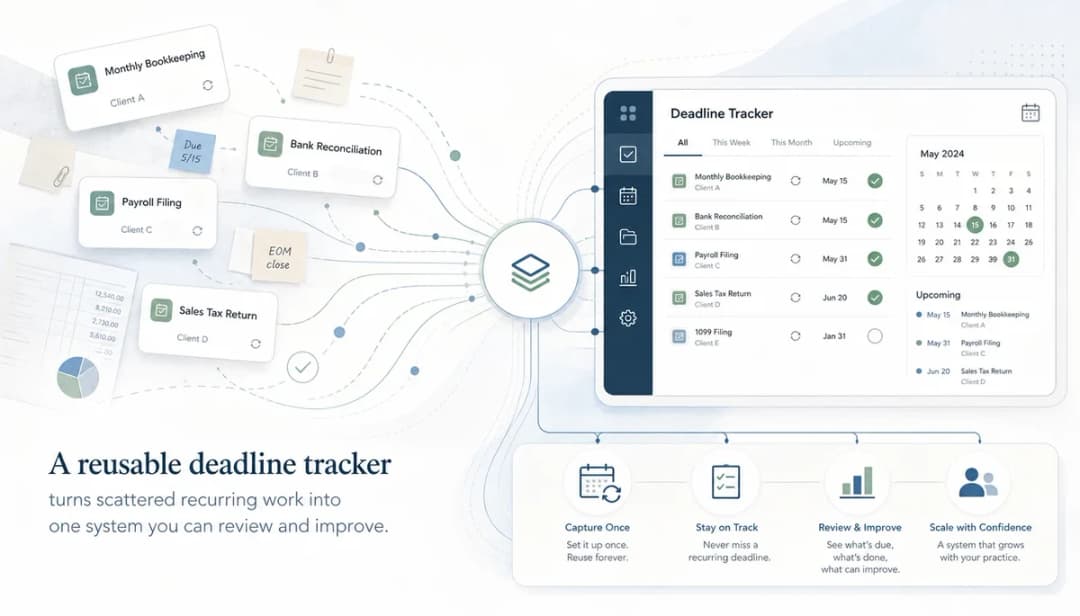
A better pattern is to treat your close as a reusable system: one month end close workflow that gets sharper each cycle. Finish the current month, capture what changed, improve the month end close template, then create next month’s plan from that better version.


1. Separate the completed close from the reusable template
The completed close and the reusable template should not be the same thing.
The completed close is history. It shows what happened for that month: which tasks were done, where notes were added, what evidence was gathered, what exceptions came up, and what had to be chased. Keep it, because it is useful context for review and future questions.
The reusable month end close template is different. It is the clean structure you want to start from next month. It should contain the recurring tasks, subtasks, notes, reminders, dependency structure, and reference material that make the next close easier to run.
In dypt, you can work with this in two ways.
First, you can keep a proven monthly close checklist as a reusable task tree, copy it for the next period, and adjust the dates and notes before the month starts.
Second, for predictable recurring work, you can use recurring tasks so dypt recreates the task, subtasks, notes, and setup on the schedule you define. That is a natural fit for a month end close template because the structure repeats, but each period still needs its own live checklist.
The important point is simple: do not let last month’s messy working copy become next month’s starting point without review.
2. Review the close while the pain is still fresh
You do not need a formal post-close ceremony. You need ten honest minutes while the problems are still easy to remember.
Ask three questions:
- What slowed this close down?
- What did we have to explain, chase, or recreate?
- What should be different in the next monthly close checklist?
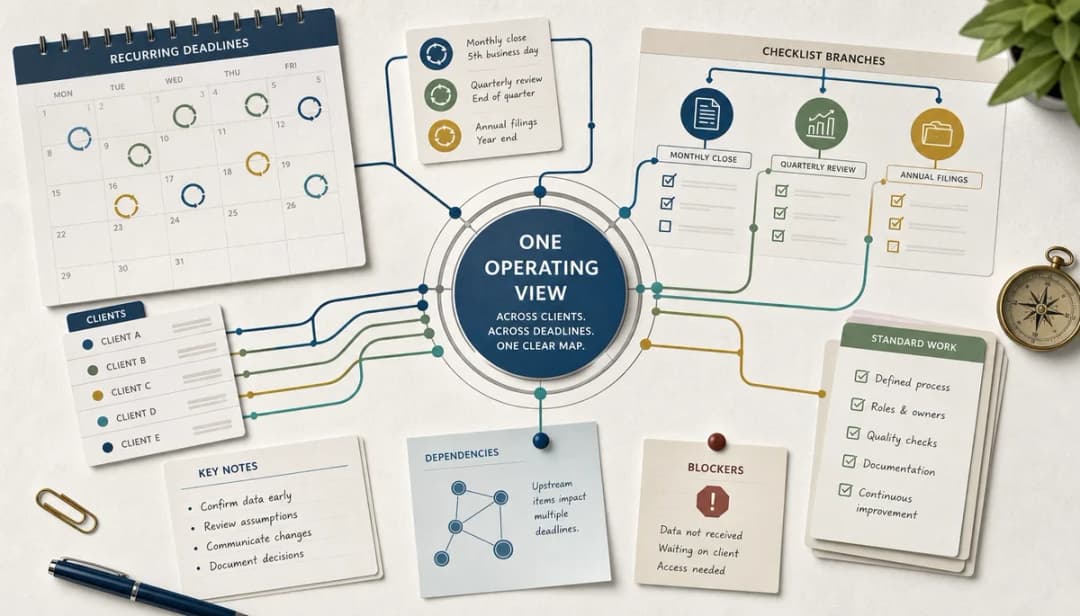
This is where the earlier guides come back together. If a task waited on another branch, use the dependency thinking from Part 4. If a reminder came too late, use the calendar thinking from Part 5. If a checklist step was too vague, go back to the action-sized task approach from Part 3.
Keep the review grounded. You are not trying to redesign finance operations every month. You are looking for small improvements that make next month’s close easier to start, easier to run, or easier to review.
Good candidates include:
- a task that always needs the same supporting note
- an input that repeatedly arrives late
- a checklist item that is too broad
- a dependency that was only obvious after someone got stuck
- a reminder that fired after the useful moment had passed
- a recurring exception that should become part of the standard process
If nothing meaningful changed, do not invent improvements. A reusable close system should become clearer over time, not heavier for its own sake.
3. Update the template before copying it forward
The best time to improve the month end close template is before you create next month’s plan.
If you copy first and improve later, the improvement is easy to forget. You end up with two versions: the live next-month checklist and the ideal checklist you meant to update. That is exactly the kind of split that makes recurring accounting work drift.
Update the reusable version first.
Start with task names. Replace vague items like “review accruals” with clearer steps if the close showed that people interpret them differently. Add subtasks where a single line hides several actions. Remove tasks that created noise but did not help anyone complete or review the close.
Then update notes. If a task always needs the same context, save that context in the task rather than relying on memory. If you use dypt note templates, turn common note formats into templates so they can be reused across clients, branches, or future close cycles.
Next, update references. If a file location, report source, or explanation was hard to find this month, add it to the relevant task. The goal is not to store everything inside the checklist. The goal is to make the next action obvious enough that the next close does not pause while someone searches through email or chat history.


4. Roll forward dates, reminders, and dependencies carefully
A copied checklist is not yet a plan.
Before next month starts, check the period-specific details:
- reporting date
- internal target dates
- client or team input deadlines
- reminders
- review windows
- dependencies between branches
- tasks that depend on third-party information
- any notes that mention a specific month or period
This is where the close calendar from Part 5 matters. You do not need to rebuild the calendar from scratch, but you do need to make sure the next month’s version reflects the real dates and working days.
If the close happens every month on a stable rhythm, recurring tasks can do a lot of the setup work for you. The recurring task creates the next instance from the structure you have already proven. You then check the month-specific dates, update any exceptions, and start with a real plan rather than a blank page.
Avoid blindly copying stale dates. A month end close workflow is only useful if the timing is trustworthy. One wrong date can make the whole monthly close checklist feel suspect.
5. Turn recurring exceptions into reusable improvements
Not every exception belongs in the template.
A one-off issue should usually stay in the completed month. It is useful history, but it does not need to become part of every future close.
A recurring exception is different. If it shows up repeatedly, it is no longer an exception. It is part of the process.
Examples:
- the same bank feed is late every month
- payroll information regularly arrives after the first reminder
- an accrual always needs the same supporting explanation
- a review question comes up every cycle
- a client response delay regularly blocks the same branch
- a report always needs manual checking before it can be trusted
Those are good candidates for the month end close template. Add a task, note, dependency, reminder, or reference that makes the issue visible before it causes delay again.
This is where the system starts to compound. The first version of the template may simply capture what you already do. The better version helps prevent the same problems from returning.
6. Start next month with a ready-to-run plan
The output of this routine is not just a cleaner template. It is a ready-to-run next month close.
By the time you are done, the next monthly close checklist should already exist or be scheduled. The main branches should be clear. Important notes should be attached. Dates and reminders should match the next period. Dependencies should show what needs to happen before blocked work can move. Recurring problems should have become visible tasks rather than hidden memory.
That is the practical value of a reusable month end close workflow. You stop treating each close as a new organisational problem. You keep one system alive, use it, learn from it, and roll it forward.


7. A simple roll-forward routine
Use this routine after each close:
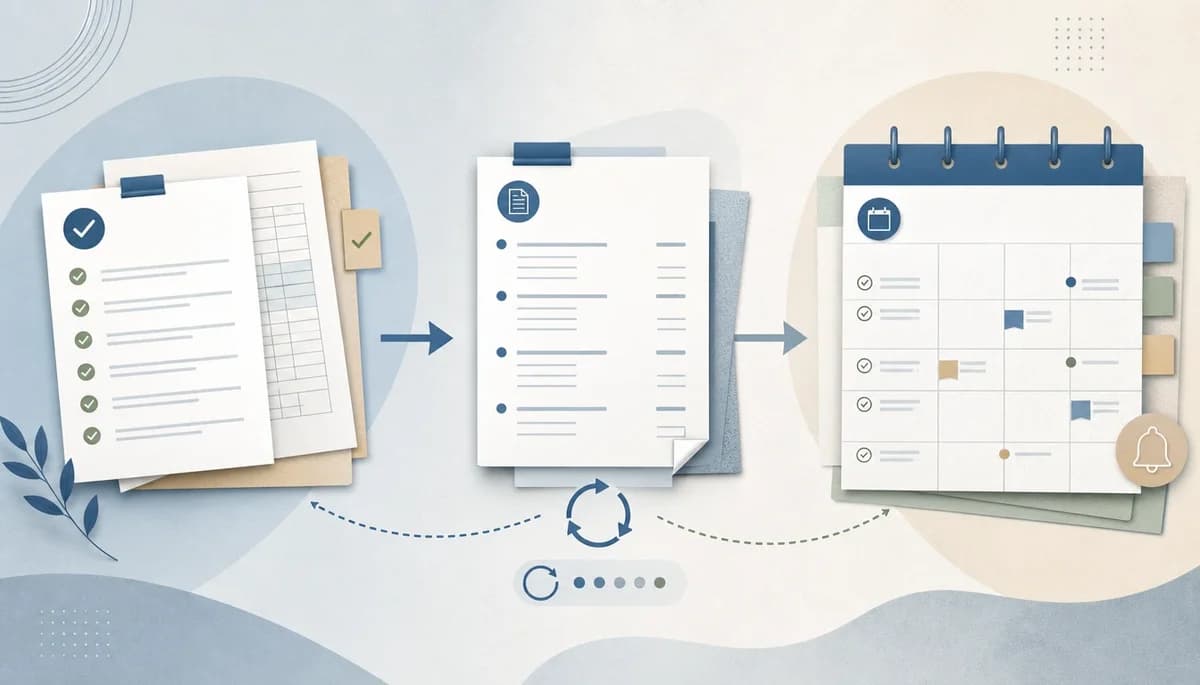
- Keep the completed checklist as the record of what happened.
- Review what slowed the close down while the detail is fresh.
- Update the reusable month end close template before copying it.
- Create or schedule next month’s checklist.
- Check dates, reminders, dependencies, and period-specific notes.
- Keep only the improvements that will help future closes.
You can make this routine a dypt task as well. If you want it to happen every month, make it recurring. That way the improvement step is part of the close process rather than something you hope to remember later.
Bringing the series together
This series started with a simple idea: accountants should not have to rebuild month-end close from memory every month.
First, you defined the repeatable workflow. Then you mapped the close before building the checklist. Then you turned that map into a practical checklist, added dependencies and review points, built the calendar, and now rolled the system forward.
That is the difference between a one-off task list and a reusable accounting workflow.
If you want a faster starting point, use the monthly close checklist for accountants and adapt it to your own clients, team, and timetable. The goal is not to copy someone else’s perfect process. The goal is to stop starting from scratch and improve one reusable system every close.