Dane Poyzer

On this page10 sections
AI task breakdown is useful when a task is too vague to start. The hard part is rarely knowing that something matters. The hard part is turning a messy intention into a clear next action, then keeping the rest of the work structured enough that you can come back to it later.
That is where dypt is strongest. You can capture the messy version of a task, use AI to extract action items or generate subtasks, then keep the result inside a real task tree with priorities, deadlines, reminders, notes, and review habits.
This guide shows how to use dypt as an AI task manager for breaking down work without losing the task-management layer that makes the plan usable. It also shows when an AI to-do list generator is enough and when you need a fuller task tree.
What AI task breakdown should actually do
A good AI task breakdown should do more than produce a long checklist. It should help you move through five steps:
- Capture the messy input in plain language.
- Extract the actual action items.
- Suggest subtasks in a useful order.
- Help you choose the next action.
- Keep the plan alive with deadlines, reminders, priorities, and review.
If a tool only gives you text, you still have to copy the output somewhere, decide what belongs together, and rebuild the plan when it changes. That can be fine for a one-off prompt, but it is fragile for real work.
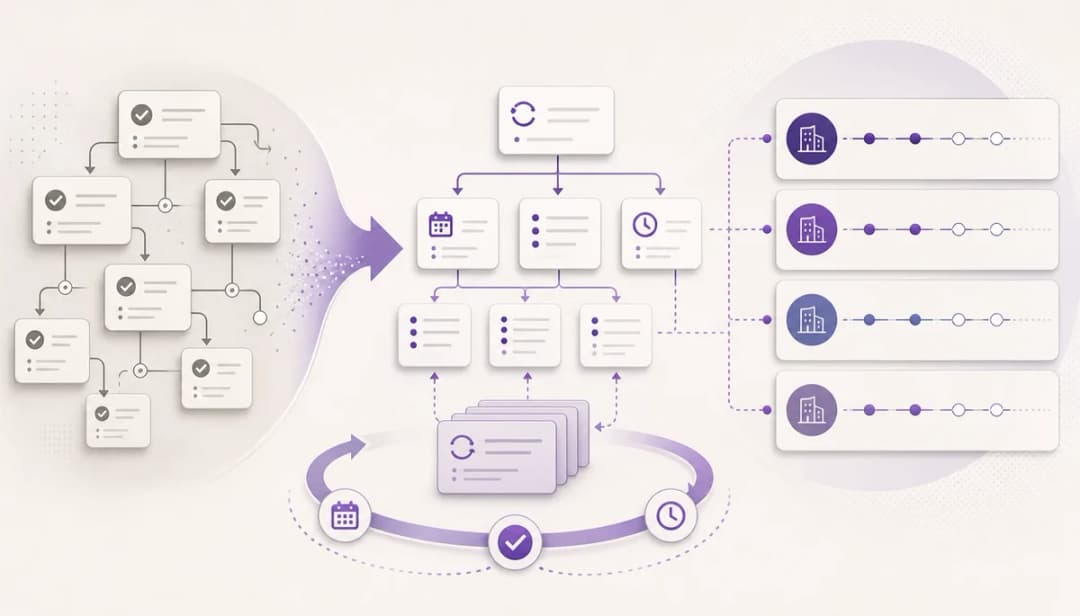
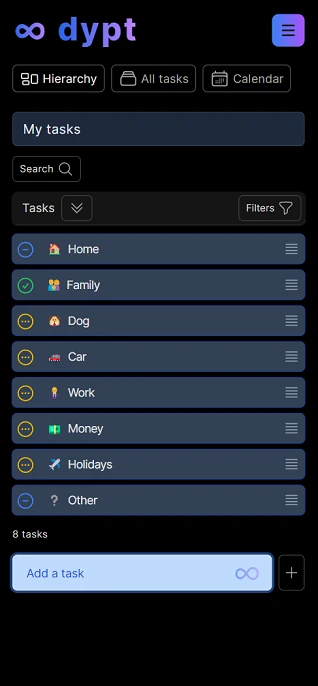
In dypt, the AI output becomes part of the task system. You can keep splitting work down until each task is small enough to start.

A simple dypt workflow for breaking down tasks with AI
Start with the rough version of the task. Do not try to make it perfect first.
For example:
I need to renovate the kitchen, but I keep avoiding it because there are too many decisions and I do not know where to start.
In dypt, that can become a parent task such as Renovate my kitchen. From there, use AI to suggest subtasks. A useful first pass might include:
- Create a renovation budget.
- Decide what needs replacing.
- Gather measurements and photos.
- Choose a layout.
- Research contractors.
- Order appliances and materials.
- Plan the temporary kitchen setup.
- Book the work.
- Track snagging and final cleanup.
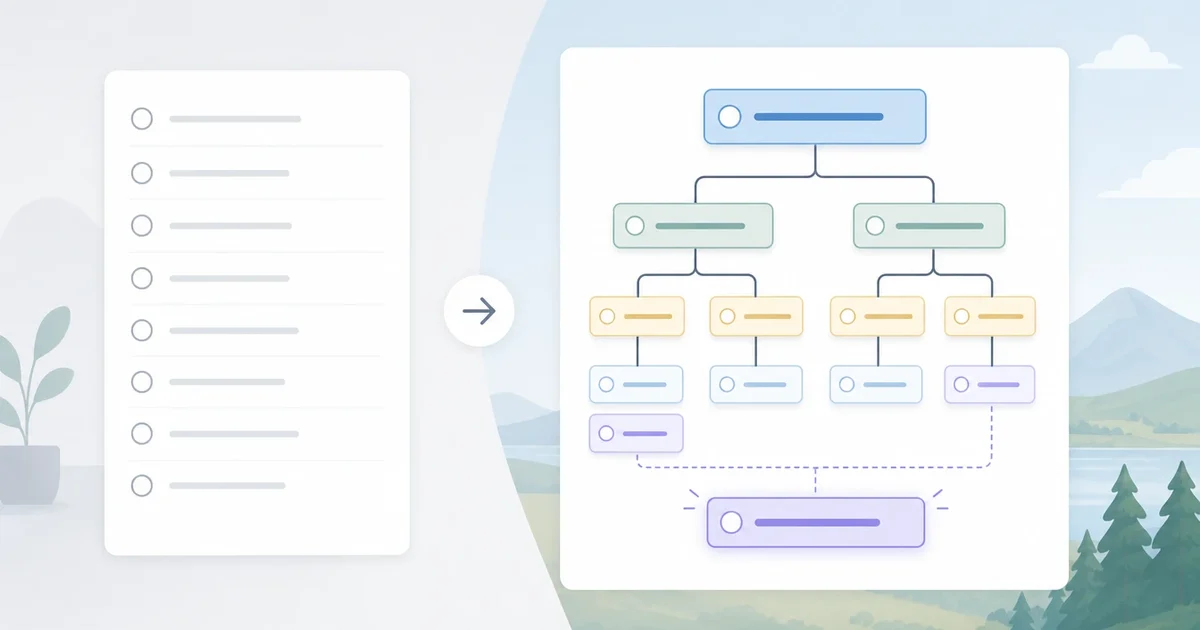
You can see a public dypt example here: Renovate my kitchen. It shows the important point: the AI task breakdown does not stop at a paragraph of advice. It becomes a structured task tree you can browse, copy, and keep refining.
Step 1: capture messy input


Messy input is often the most honest input. It contains the fear, context, constraints, and hidden decisions that a tidy task title leaves out.
Useful inputs include:
- A brain dump from your notes app.
- Meeting notes with follow-ups mixed into discussion.
- A goal you have been avoiding.
- A rough project idea.
- A shopping, packing, or preparation list.
- A photo or image that contains tasks you need to capture.
If your starting point is a raw brain dump, use this companion workflow next: How to turn a brain dump into a task list: a simple AI workflow to get started.
Step 2: extract action items


Once the messy input is captured, ask dypt to extract action items. This is useful when the source material contains a mix of ideas, decisions, reminders, and actual work.
The goal is not to keep everything. The goal is to separate:
- Tasks you can do.
- Reference notes you may need later.
- Decisions that need an owner.
- Follow-ups that need a date.
- Ideas that should not become tasks yet.
This is where an AI to-do list generator can help, but only if you review the output. AI can spot likely tasks quickly. You still decide what matters.
Step 3: generate subtasks with AI
After you have the main task, use AI to generate subtasks. This is the point where dypt works as more than an AI to-do list generator: it can create subtasks with AI and keep those subtasks nested under the original goal. Good subtasks are specific enough that you know what action to take next.
A weak breakdown looks like this:
- Plan project.
- Do project.
- Finish project.
A stronger breakdown looks like this:
- Define the outcome.
- List constraints.
- Identify the first decision.
- Gather missing information.
- Create the first small deliverable.
- Review blockers.
- Decide the next task.
For big projects, you can keep splitting tasks into smaller subtasks. That is useful when the first AI task breakdown is still too broad. If you want a non-AI version of that process, read How to effectively breakdown large tasks.
Step 4: choose the next action
A task tree is only useful if it helps you start. After dypt creates subtasks, choose the next action by asking:
- Is this small enough to do in one sitting?
- Do I know what done looks like?
- Is anything blocking it?
- Does it need a deadline or reminder?
- Is it the right priority for today?
If a task still feels heavy, split it again. If it feels vague, rewrite it as a concrete action. If it is waiting on someone else, add that context instead of letting it sit in the same pile as active work.
For readers dealing with task paralysis, this smaller-next-action step matters more than having a perfect plan. The related article Beating ADHD task paralysis goes deeper on that pattern.
Step 5: add deadlines, reminders, priorities, and review
AI can generate a plan, but the task manager has to help you live with it.
Use dypt to add:
- Deadlines for time-sensitive work.
- Reminders for follow-ups.
- Priorities for what deserves attention first.
- Notes for context you do not want to lose.
- Review moments for projects that will change.

This is the difference between a generated list and a working system. The list tells you what could happen. The system helps you decide what to do next.
For prioritisation traps to avoid, see 5 myths about task prioritization that make overwhelm worse.
When to use dypt instead of a chat prompt
A chat tool is useful when you want quick thinking help. It can draft a checklist, suggest categories, and give you a first pass.
Use dypt when the output needs to become live work. A standalone AI to-do list generator can give you a first draft, but dypt lets you generate subtasks with AI and then manage those tasks over time:
- You want nested subtasks, not a flat response.
- You need deadlines or reminders.
- You want to revisit and refine the plan.
- You want to copy or share a task tree.
- You want the AI task breakdown to stay connected to your actual task list.
That is the practical difference between asking AI for ideas and using an AI task manager.
More public examples of AI task breakdown
These examples show the shape of generated task trees in dypt:
- Renovate my kitchen
- Start a vegetable garden
- Begin writing a mystery novel
- Plan a two-week trip to Japan
- Host a charity gala
- Introduce a new tech gadget
The details differ, but the pattern is the same: start with a vague goal, generate subtasks, then keep the plan inside a structure you can act on.
The bottom line
AI task breakdown works best when it turns overwhelm into a small next step. dypt gives you the AI help and the task structure in the same place: messy input, extracted action items, generated subtasks, priorities, deadlines, reminders, and review.
Start with the task you are avoiding. Capture it badly if you need to. Then let dypt help you make it small enough to begin.