Dane Poyzer
On this page10 sections
You write tomorrow's to-do list and it has nineteen things on it. You know you won't finish them all, but they all seem to need doing, so they all go on. Tomorrow evening, twelve are still there, and the day feels like a failure even though you worked flat out.
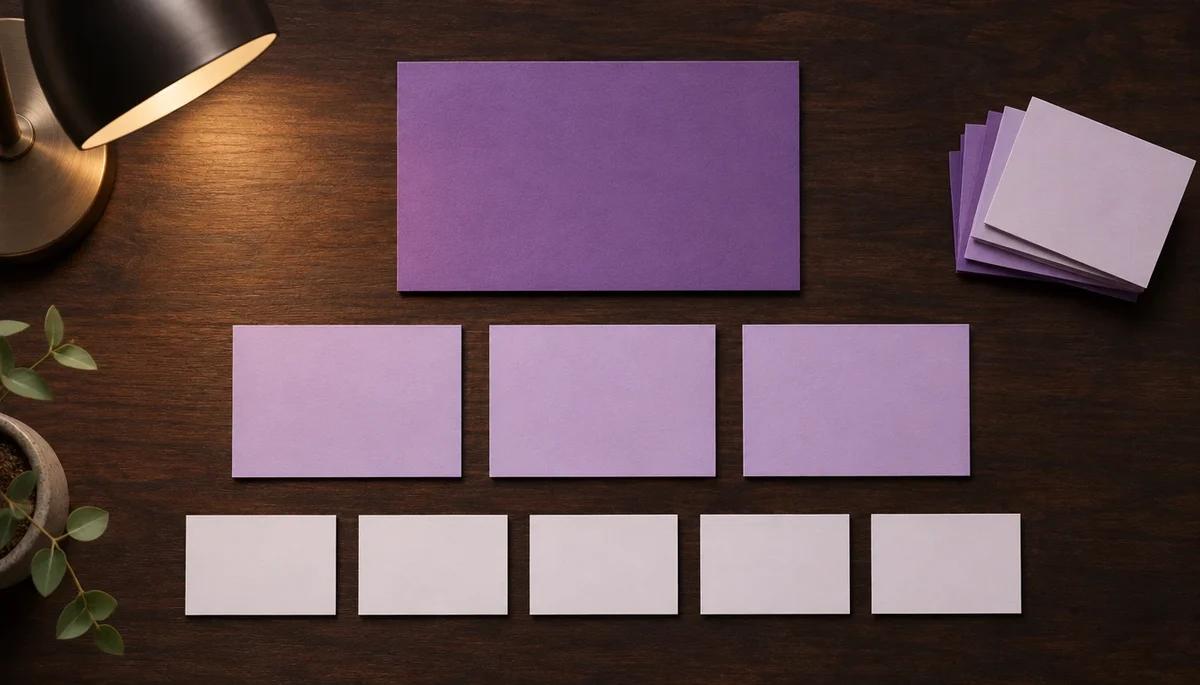
Sometimes the list asks for a week's work in one day. The 1-3-5 rule gives you a starting limit: plan one big job, three medium jobs and five small ones, with fewer on busy days, and leave everything else on your longer list for another day.
The 1-3-5 rule at a glance
- What it is: a way to limit a daily to-do list by choosing jobs in three sizes.
- The rule: one big thing, three medium things and five small things. Nine jobs at most.
- Everything else: stays on your master list. It hasn't been forgotten; it just isn't today's.
- The catch: nine is a ceiling, not a target. On busy or unpredictable days, plan fewer.
- Who it helps: anyone whose days mix one meaningful piece of work with a stream of smaller jobs.
Where it comes from
The 1-3-5 rule was set out by Alex Cavoulacos, co-founder of the careers site The Muse, in an article on why you never finish your to-do list at work. Her advice: "On any given day, assume that you can only accomplish one big thing, three medium things, and five small things." The Muse's editors later wrote up their own trial of it, crediting Cavoulacos with the tip.
It sits inside a slightly bigger routine. First, keep one master list of everything you have to do. Then, before you finish work each day, choose the next day's 1-3-5 from it.
How to plan a 1-3-5 day
- Keep a master list. Everything you have to do goes here, so nothing is lost when it doesn't make today's cut.
- Before you stop work, choose tomorrow's big job. One thing that would make the day worthwhile if it were the main thing you did.
- Add three medium jobs. Real work, but smaller: a few calls to make, a document to review, a short piece of writing.
- Add five small jobs. Quick things that still need doing: an email, a booking, a form.
- Check it against your day. Look at tomorrow's meetings and fixed commitments, and ask whether these jobs can realistically be done in the hours left. If not, take some off.
- Stop there. If something else is pressing, it has to replace one of the jobs, not join them.
- Tomorrow, work the list. Many people start with the big job while they're fresh and fit the small ones into the gaps, but the rule itself doesn't set an order.
Planning the evening before means the decisions are made when you can see the whole picture, and you can start straight away in the morning.
How big is big?
The rule doesn't define sizes, and that's sensible: a big job for a nurse looks nothing like a big job for a designer. A useful way to think about it:
- Big: the job that needs your best focus and a good stretch of time. It's often the one you'd be tempted to put off.
- Medium: needs some concentration but not your whole morning.
- Small: quick and simple. If it takes thought, it's probably medium.
If your "one big thing" is really a project, such as "launch the new website", it won't fit in a day. Pick the next real piece of it instead: "write the homepage copy".
The catch: leave room
Nine jobs won't fit every day, and Cavoulacos says so herself. If you spend much of your day in meetings, she suggests revising the number down. And if your job brings a lot of unexpected requests, she suggests leaving one medium and two small slots blank, ready for whatever lands.
That's the part people skip. A 1-3-5 list that's full by nine o'clock leaves no room for the day as it really happens. A list with a few empty slots does.


Here's a made-up example. On a fairly clear day:
- Big: Write the client proposal
- Medium: Review Jo's slides; plan next week's social posts; call three suppliers for quotes
- Small: Pay the window cleaner; book the team lunch; reply to the accountant; order printer ink; update the shared calendar
On a day with three hours of meetings, the same person might plan:
- Big: Write the client proposal
- Medium: Review Jo's slides; (blank)
- Small: Pay the window cleaner; reply to the accountant; order printer ink; (blank); (blank)
The other jobs stay on the master list for another day, and the blank slots catch whatever lands. Two common traps:
- Treating nine as a quota. If you feel you must fill every slot, you're back to planning more than the day can hold.
- Smuggling big jobs into small slots. "Sort out the car" is not a small job. Be honest about size, or the list won't fit.
Strengths and limitations
| Strength | Limitation | What to watch for |
|---|---|---|
| Sets a limit on the day's list | Depends on judging job size well | Break vague big jobs down until the first piece fits |
| Gives one meaningful job proper space | Nine slots can become a quota | Plan fewer on meeting-heavy or unpredictable days |
| Makes room for small jobs that would exist anyway | Doesn't tell you which big job matters most | Choose the big one with a prioritisation method if needed |
| Leftovers have a home on the master list | The master list can grow without review | Look through it regularly and prune |
| Easy to try on paper tonight | Rigid sizes don't suit every role | Adapt the shape: 1-2-3 is fine if that's your real day |
Is the 1-3-5 rule right for you?
It suits days that mix one meaningful piece of work with a stream of smaller jobs. The 1-3-5 rule is a shape for that kind of mixed day. Most important tasks (MITs) is a different shape: pick about three things that matter and do them first. The Ivy Lee method is a ranked list of six done strictly in order. They're alternatives, not layers: don't plan three MITs and nine 1-3-5 jobs on the same day. If you're unsure which suits you, our comparison of MIT, Ivy Lee and 1-3-5 can help you choose.
Planning a 1-3-5 day in dypt
dypt doesn't have a 1-3-5 template or enforce the nine-job limit, but its tags, estimates and filters suit the method well.
- Keep your master list as it is. Your projects and their subtasks are the master list. Nothing needs to move.
- Tag tomorrow's chosen jobs by size. Create three custom tags, such as
1-big,3-mediumand5-small, and add them to the jobs you choose for tomorrow. To see them together, open All tasks, clear any project scope and select the three tags with "Match all selected" off. That shows every task carrying any of the three tags, wherever it lives in your hierarchy. Remove the tags when you plan the next day. - Use estimates to check sizes. Add time estimates, or ask the AI for a rough first guess (AI actions depend on your plan's allowance). If several "small" jobs each look likely to take an hour, reconsider their size, and compare the whole list with the time you actually have. The time filter shows tasks estimated to take up to the time you pick: 15m means 15 minutes or less.
- Break the big job down. Nest its first steps underneath it, or let AI task breakdown suggest them, so it's clear where to start in the morning.
- Make planning a habit. Create a task called "Choose tomorrow's 1-3-5" with an afternoon deadline and set it to repeat on weekdays. Include deadlines in the repeat settings and leave deadline roll-forward on, so each new copy is due that day.
Plan tomorrow's 1-3-5 tonight
Before you finish today, look at everything you have to do and choose one big job, three medium and five small for tomorrow. If tomorrow's busy, leave a few slots empty on purpose. Everything else can wait on the master list; it'll still be there.
If you'd like a place to keep the master list and pull out each day's 1-3-5, try it in dypt, free to start.
Further reading
-
Alex Cavoulacos: Why you never finish your to-do lists at work
The original advice, including the master list and the 1-3-5 rule. -
The Muse: A better to-do list, the 1-3-5 rule
The Muse editors' write-up of trying the rule, with tips on adapting it.